Your Phone Isn't the Problem — But the Way You're Using It Might Be
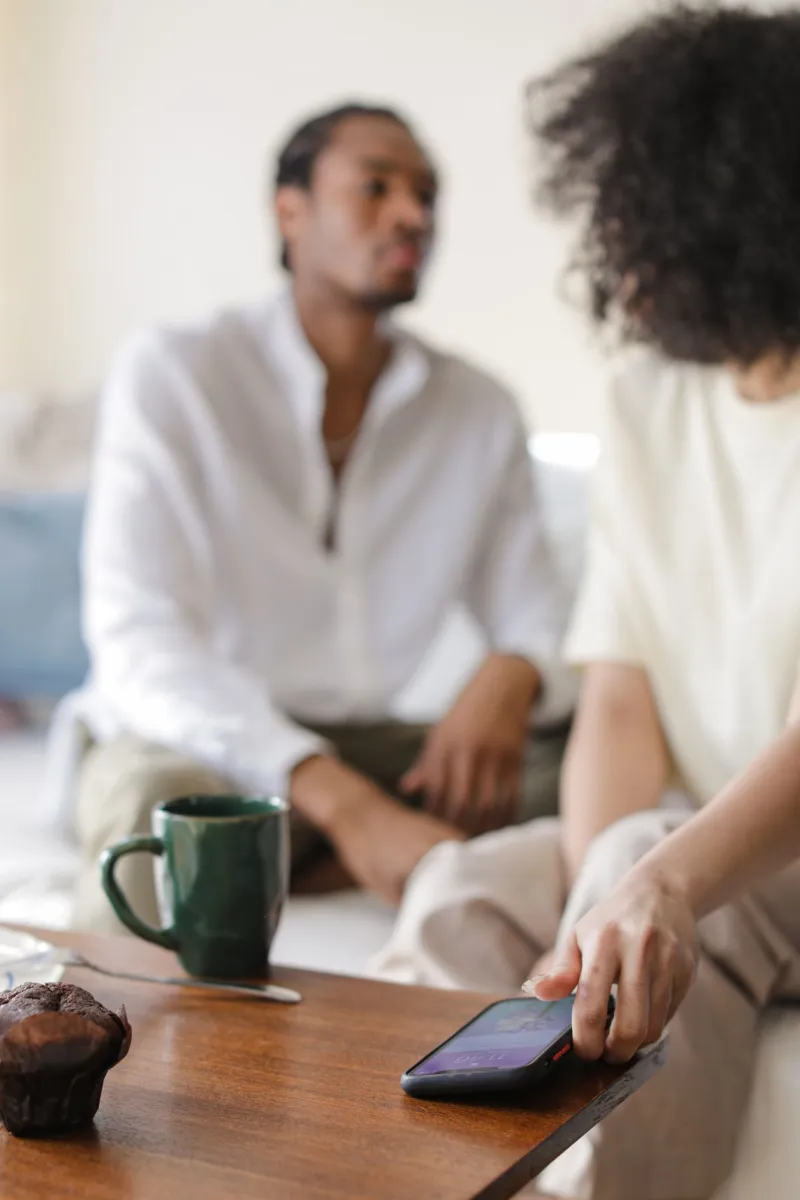
Photo: person putting smartphone face down on wooden table mindfulness, via images.pexels.com
Let's get the obvious irony out of the way: you're probably reading this on your phone.
That's fine. Really. The goal here isn't to shame anyone into a weekend retreat in the woods with a flip phone and a journal. The goal is to have an honest conversation about something most of us feel but rarely articulate — that our devices have quietly shifted from tools we use to environments we live in, and that shift has costs.
But here's where the wellness industry gets it wrong: the answer isn't another app.
The Wellness App Paradox
Open the App Store and search 'digital wellness.' You'll find dozens of apps promising to help you use your phone less — apps that send you notifications reminding you to put down your phone, apps with beautiful dashboards showing how many hours you've spent doom-scrolling, apps that gamify screen-time reduction with streaks and badges.
Spot the problem?
Dr. Lena Marsh, a behavioral psychologist and digital wellness consultant based in Austin, Texas, puts it plainly: 'A lot of these apps are solving for engagement, not wellbeing. The metrics they optimize for — daily active users, session length, return visits — are fundamentally at odds with what genuine digital balance looks like.'
She's not wrong. Several of the most popular screen-time tracking apps have been flagged by researchers for increasing anxiety around phone use rather than reducing it. You become hyperaware of every minute, which creates its own kind of stress. You're no longer just using your phone — you're auditing yourself using your phone.
That's not wellness. That's a different flavor of the same problem.
What 'Detox Mode' Actually Means
The phrase 'digital detox' has become so overused it's nearly meaningless. It conjures images of someone dramatically tossing their iPhone into a lake before a yoga retreat. In real life, for most Americans juggling jobs, families, side hustles, and social lives, a complete digital disconnect isn't realistic — or even desirable.
What is realistic is intentional friction. That's the term James Okafor, a UX designer and digital habits coach in Chicago, uses with his clients. 'The goal isn't to eliminate your phone. It's to make unconscious use slightly harder, so that every time you pick it up, there's a small moment of choice.'
His framework is simple and doesn't require downloading anything:
Step 1: Audit without an app. Before you download a screen-time tracker, spend one day just noticing — not measuring — when you reach for your phone. What triggered it? Boredom? Anxiety? Habit? You'll learn more from 24 hours of mindful observation than from a week of app-generated data.
Step 2: Create physical distance. Charge your phone outside your bedroom. Leave it in your bag during meals. These aren't radical moves, but they introduce the physical separation that apps can't replicate.
Step 3: Reorganize your home screen. Move social media apps off your home screen entirely. Not deleted — just buried. That extra two taps is enough friction to interrupt automatic behavior. It sounds too simple to matter. It really does work.
Step 4: Designate phone-free windows. Not full days. Just windows. The first 30 minutes after waking up. The hour before bed. Sunday mornings. Pick one and protect it.
When Apps Actually Help
To be fair, not every wellness app deserves the side-eye. A few tools genuinely earn their place on your home screen.
Headspace and Calm get a lot of criticism for being 'just another app,' but for users who struggle to establish a meditation habit without structure, they serve a real function. The key is using them as a launchpad — a way to build the habit — not as a permanent crutch.
One Sec is one of the more cleverly designed apps in this space. Instead of tracking your usage, it inserts a mandatory breathing pause before opening apps you've flagged as problematic. It's the digital equivalent of putting a sticky note on your fridge. Small friction, real impact.
Screen Time (iOS) and Digital Wellbeing (Android) — the native tools built into your operating system — are underrated precisely because they're not trying to monetize your attention. They're blunt instruments, but setting hard app limits for social media during certain hours is genuinely effective for a lot of people.
'The best digital wellness tool is the one that eventually makes itself unnecessary,' Dr. Marsh says. 'If you're still relying on an app to manage your phone use a year from now, something isn't working.'
The Bigger Picture: Redesigning Your Relationship with Your Device
Here's a reframe that might be more useful than any app or strategy: your smartphone is a surface. What matters is what you put on it.
A phone loaded with creative tools, long-form reading apps, language learning software, and communication with people you actually care about is a fundamentally different object than a phone optimized for infinite scroll and algorithmic content. Same hardware. Completely different experience.
Okafor calls this 'intentional curation.' 'Most people have never consciously decided what they want their phone to be for. They just download whatever's popular and wonder why they feel worse after using it.'
Take 20 minutes this week and ask yourself: which apps on my phone make me feel better after using them? Which ones make me feel worse? That's it. That's the audit. Delete or hide the second category. It's not about willpower — it's about design.
A Note on the Language We Use
The term 'detox' implies your phone is a toxin — something foreign and harmful that needs to be purged. That framing sets people up for an all-or-nothing mindset that almost always fails.
A more useful mental model: your smartphone is a kitchen knife. Genuinely useful. Potentially harmful if misused. Not something you detox from, but something you learn to handle well.
You don't need a detox. You need better habits, a little intentional friction, and maybe a home screen redesign.
Start there. The lake can keep your iPhone.